Closer Than You Think: Celebrating America’s 250th in the Blue Ridge Mountains
Updated: May 28
America turns 250 this year. In the Blue Ridge Mountains, that history is closer than you might think.

There’s a particular kind of summer that lives in the Blue Ridge Mountains. The mornings start cool enough for a sweater and a second cup of coffee on the porch. The afternoons stretch out under big shade trees. The evenings come with fireflies and the smell of someone’s grill carrying down a quiet street.
It’s been like this for a long time. Longer than the country we’re about to celebrate has had a name for itself.
This July, the United States turns 250. And here in Western North Carolina, that anniversary lands a little differently than it does most places. The names on our maps are, in many ways, a Revolutionary roll call.
The Asheville area was Cherokee gathering ground long before European settlement — the Cherokee called it Untokiasdiyi, “Where they race.” After the Revolution, the new nation opened these mountains to westward settlement, and in 1784 Colonel Samuel Davidson became the first European settler to build a cabin in the Swannanoa Valley, just east of present-day Asheville. The county that grew up around him was named for Edward Buncombe, a Revolutionary War colonel who died of wounds taken as a prisoner of war. The town itself was first called Morristown — after Robert Morris, the signer of the Declaration of Independence who personally underwrote much of the Revolution. In 1797, it was renamed once more, this time for Samuel Ashe, the Revolutionary-era governor of North Carolina.
Walk through downtown Asheville today and you are, quite literally, walking through a directory of America’s founding generation.
Where American history lives here
Western North Carolina holds chapters from across America’s 250 years — not just the founding. Three worth driving for:
Biltmore Estate (1895). Built by George Vanderbilt as a private retreat and still the largest privately owned home in America, Biltmore is a Gilded Age monument that reshaped what was possible in American architecture and landscape design. The original estate spanned about 125,000 acres; in 1914, Edith Vanderbilt sold 86,700 of those acres to the federal government, creating Pisgah National Forest — one of the first national forests east of the Mississippi. The remaining 8,000 acres are still the Biltmore you can visit today.
In 2026, the estate hosts Luminere, a new outdoor evening experience that projects the Vanderbilt family’s story onto the house itself and illuminates the gardens. It runs through October 18, 2026, on select evenings, and every ticket includes free next-day grounds access.
The Cradle of Forestry (1898). On 6,500 acres of the original Biltmore land, Dr. Carl Schenck — George Vanderbilt’s chief forester — founded the first forestry school in America. The Biltmore Forest School ran here until 1914, training a generation of foresters who would go on to shape the US Forest Service and the American conservation movement. Today you can walk through seven preserved school buildings, climb aboard a 1914 logging train engine, and see an American Sycamore grown from a seed that flew to the moon on Apollo 14.
The Overmountain Victory National Historic Trail. Just east of Asheville, near present-day Marion, the Overmountain Men mustered at Quaker Meadows in 1780 before marching south to Kings Mountain — a battle Thomas Jefferson later called “the turn of the tide” of the Revolution. The trail still runs through our region, with quiet markers in front yards and along country roads, easy to miss if you don’t know to look for them.
That story isn’t decoration. It’s the actual ground these inns sit on.
Stay where WNC history lives

Several of our member inns are themselves preserved chapters of the region’s story — historic homes kept alive by innkeepers who’ve made it their work to do so. Three worth knowing:
The Reynolds Mansion (1847). One of the few remaining pre-Civil War homes in Western North Carolina, built by Daniel Reynolds and his family on the slopes of what is now Reynolds Mountain. The Mansion’s history threads through the small emerging town of Asheville, Senator Robert Rice Reynolds — known as “Buncombe Bob” — and even Evelyn Walsh McLean, the last private owner of the Hope Diamond. Twelve fireplaces, more than 3,000 square feet of porches, and five acres of mountain views, just four miles from downtown Asheville.
Cedar Crest Inn (1891). Built by Charleston banker William E. Breese and listed on the National Register of Historic Places, this Queen Anne Victorian — known locally as Asheville’s “Pink Lady” — was originally called Swannanoa Hill. The interior woodwork was crafted by some of the same artisans then at work on Biltmore. Three blocks from the Biltmore entrance, on three acres above the Swannanoa River.

1899 Wright Inn & Carriage House (1899). A 125-year-old Queen Anne Victorian in the historic Montford district, with multiple gables, slate roofs, spindle trim, and Doric-columned porches — one of Asheville’s best surviving examples of Colonial Revival-influenced architecture. Walking distance to downtown, three miles to Biltmore’s main gate, and a dog-friendly carriage house out back.
And those are three of our sixteen. The Asheville Bed & Breakfast Association represents inns across Asheville, Hendersonville, Waynesville, Weaverville, and Marion — each with its own story. Browse the full member directory at ashevillebba.com/our-inns.
Closer than you think
This summer, more Americans are skipping the airport. Recent travel research shows a clear shift back toward the drivable trip — fewer big international vacations, more road trips to places that feel meaningful rather than merely convenient. Travelers are taking fewer trips overall, but spending more on the ones they choose.
That makes the Blue Ridge Mountains a particularly good answer this year.
We’re within a comfortable drive of much of the Southeast and Mid-Atlantic. Coffee in your kitchen, lunch on the road, and unpacking on a wraparound porch before the afternoon’s out.

A summer worth driving for
What you’d find here, this particular summer:
Small-town Fourth of July parades and fireworks across our member towns — Asheville, Hendersonville, Waynesville, Weaverville, Marion, Black Mountain — each one its own flavor of homemade Americana
The Blue Ridge Parkway, marking its own milestone in 2026 as the National Park Service celebrates 90 years
Local festivals running all summer long, from bluegrass to livermush to white squirrel celebrations (yes, really)
And the kind of evenings that don’t quite happen at home — the ones where you sit on the porch with strangers who’ve become friends over breakfast, and watch the light go soft over the mountains
Two hundred and fifty years is a lot to celebrate. The truest version of it might not happen at a stadium or a downtown fireworks show. It might happen on a quiet road on the way here. In a town square parade, you watch from the curb with a paper flag. On the porch of a small inn, where someone you’ve just met passes you a slice of pie.
Plan your summer drive. The mountains have been waiting.
Find a B&B → ashevillebba.com/our-inns
Start planning your summer → https://www.ashevillebba.com/free-getaway-guide
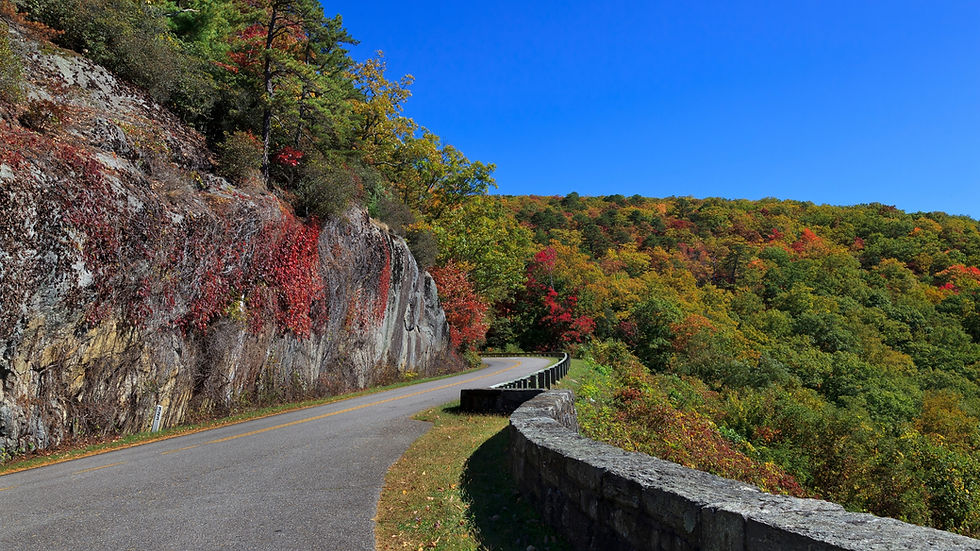
Feature image photo credit:@tullyrama on Instagram.
The Asheville Bed & Breakfast Association is a collection of independently owned inns, cottages, cabins, and boutique hotels across Western North Carolina. Our innkeepers are your local guides to the best the mountains have to offer — from Blue Ridge Parkway adventures to world-class events like the Biltmore Championship.